

Key Takeaways
- Choose a sponsored post when the brand matches your niche, you can write or approve the content, and you can clearly disclose the partnership.
- Consider a link insertion only when the added resource genuinely improves an existing article and the link can use sponsored or nofollow attributes.
- Decline offers that demand hidden paid dofollow links, irrelevant anchor text, or rushed publication without editorial review.
Table of Contents
- 1. Choose the Opportunity That Pays Without Costing Trust
- 2. Understanding the Core Differences: Sponsored Content vs. Niche Edits
- 3. Sponsored Posts vs. Link Insertions: Which Type of Opportunity Fits Your Blog?
- 4. SEO Safety, Link Attributes, and Google Compliance
- 5. How to Vet Paid Collaboration Offers and Filter Out Spam
- 6. Frequently Asked Questions About Blog Monetization Placements
- 7. Conclusion
Monetizing your blog requires balancing revenue goals against SEO health and audience trust. Which opportunity fits your blog depends on your content and workflow: choose sponsored posts if you want higher payouts, full editorial control, and active engagement from your dedicated readership; choose link insertions if you want fast, low-effort monetization on existing evergreen articles that already rank in search engines (provided they use compliant rel="sponsored" or rel="nofollow" attributes).
Choose the Opportunity That Pays Without Costing Trust
Sponsored posts and link insertions both put money in your pocket, but they demand very different trade-offs in time, editorial control, and SEO risk. This guide breaks down how each model works, what you can expect to earn, and how to choose the opportunity that fits your blog without costing audience trust.
Sponsored posts are usually the better fit when you want meaningful income, full control over the content, and a clear benefit for your readers. Link insertions are faster and require less work, but a paid link in an older article carries more SEO risk, especially if an advertiser asks for a dofollow link.
Use this simple rule:
- Choose a sponsored post when the brand matches your niche, you can write or approve the content, and you can clearly disclose the partnership.
- Consider a link insertion only when the added resource genuinely improves an existing article and the link can use
rel="sponsored"orrel="nofollow". - Decline any offer that demands a hidden, paid dofollow link, irrelevant anchor text, or rushed publication with no editorial review.
For most publishers, the safest long-term path is to treat sponsored content as an audience-first partnership, not a way to sell ranking signals. A great offer should pay fairly, fit your readers' needs, and leave you in charge of what appears on your site.
Understanding the Core Differences: Sponsored Content vs. Niche Edits
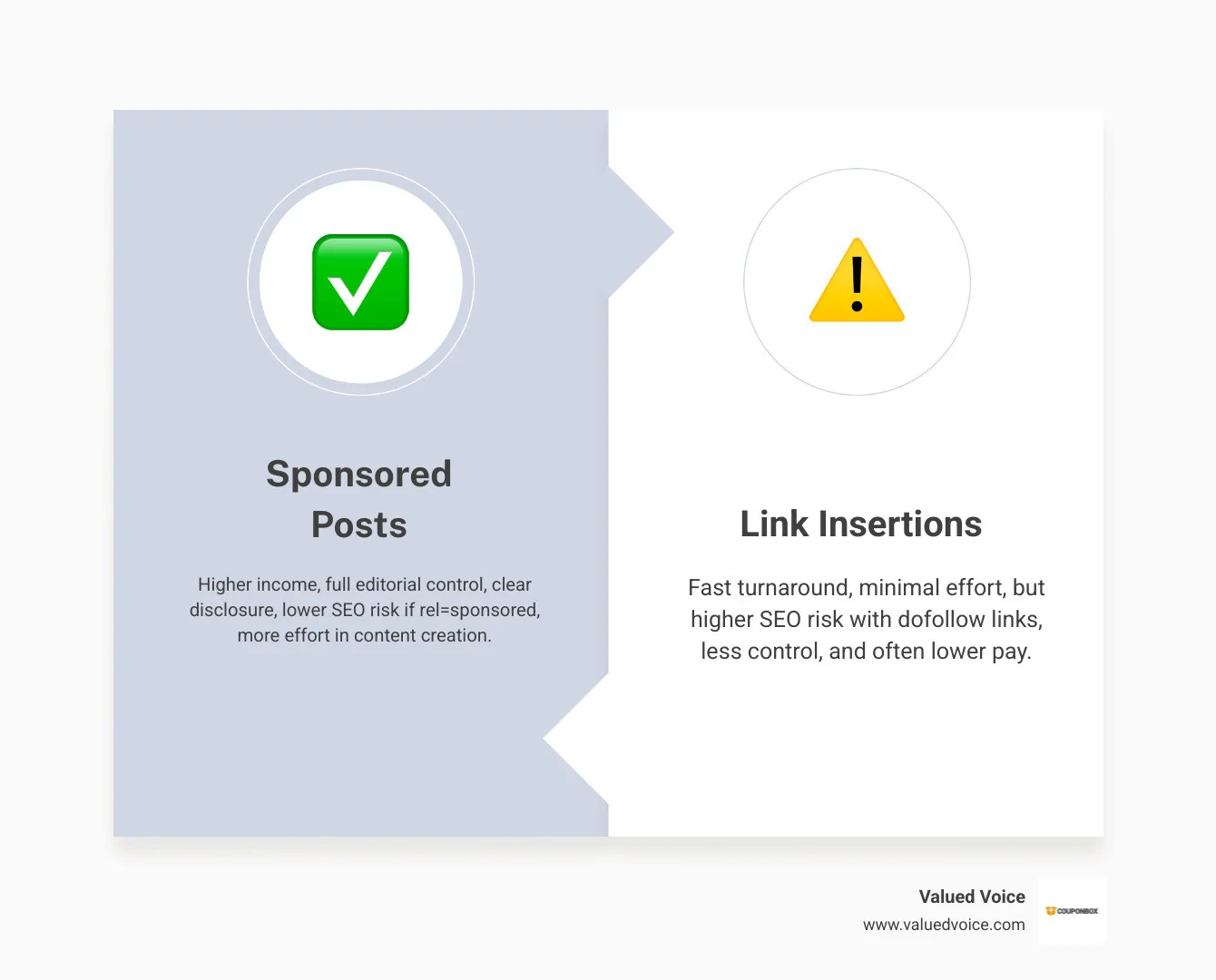
As your blog grows, your inbox inevitably fills with inbound outreach from agencies, brands, and link builders. Most of these commercial proposals fall into two distinct buckets: sponsored posts and link insertions (frequently called niche edits).
While both monetization models offer a way to generate revenue from your digital real estate, they function under entirely different publishing workflows and risk profiles. Understanding the Differences Between Sponsored, Promoted & Link Insertion Posts is essential if you want to monetize sustainably without sacrificing your organic search traffic or the trust of your audience.
| Feature | Sponsored Posts | Link Insertions (Niche Edits) |
|---|---|---|
| Primary Definition | Dedicated, newly published standalone article | Hyperlink added to an already published, indexed post |
| Content Creation | Written by the blogger or provided as a sponsored draft | Minimal writing; 1–2 sentences inserted into existing text |
| Effort Required | High (research, drafting, formatting, imagery) | Low (quick editorial update in your CMS) |
| Average Earnings | $250 to $5,000+ (typical rates $500–$1,000) | $50 to $250 (average market cost ~$179) |
| Editorial Control | Complete oversight of tone, context, and messaging | Limited to the specific paragraph being updated |
| Audience Visibility | High front-page exposure, newsletter mentions, social pushes | Low to subtle; relies on evergreen traffic to that specific URL |
| SEO Risk Profile | Low when labeled with rel="sponsored" or rel="nofollow" |
Moderate to High if advertisers demand covert dofollow links |
| Turnaround Time | Days to weeks | Minutes to hours |
What Is a Sponsored Post?
A sponsored post is an original, dedicated piece of content created in collaboration with an advertiser. Whether you write the piece yourself to maintain your unique brand voice or review an advertiser-supplied submission through paid guest post opportunities, the entire post revolves around a relevant theme that highlights the sponsor's product, service, or industry insights.
Sponsored posts excel at delivering thought leadership, storytelling, and high brand awareness. For example, a food blogger partnering with an organic cookware brand can craft an original recipe, shoot authentic high-resolution photos, and explain exactly why the pan makes searing easier. The reader gets a helpful recipe, the brand gets direct exposure to a warm audience, and the publisher earns a healthy fee. Because the content is new, it appears at the top of your blog feed, gets distributed via RSS, and can be shared across your social channels.
What Is a Link Insertion (Niche Edit)?
A link insertion—often referred to in the SEO industry as a niche edit—involves adding a contextual backlink into an article you have already written and published.
Instead of crafting a 1,500-word article from scratch, you locate a relevant paragraph within an existing post and weave in a specific hyperlink using the buyer's desired anchor text. Advertisers prize link insertions because the host page already has established page authority, URL rating, and indexed keyword rankings in search engines. For publishers, it represents a rapid turnaround opportunity: you open your content management system, add a sentence or adjust an existing anchor phrase to include contextual backlinks, click update, and collect your payout.
However, link insertions operate quietly in the background. They do not trigger fresh newsletter alerts or sit on your homepage, meaning their primary value is passing search visibility rather than capturing active reader attention.
Sponsored Posts vs. Link Insertions: Which Type of Opportunity Fits Your Blog?
Deciding how to monetize your site requires evaluating your workflow, long-term goals, and risk tolerance. In the debate between guest posting and link inserts, the best path forward depends on your blog's specific operational stage.

When weighing Sponsored Posts vs. Link Insertions: Which Type of Opportunity Fits Your Blog?, consider where your traffic comes from and how much time you want to dedicate to production.
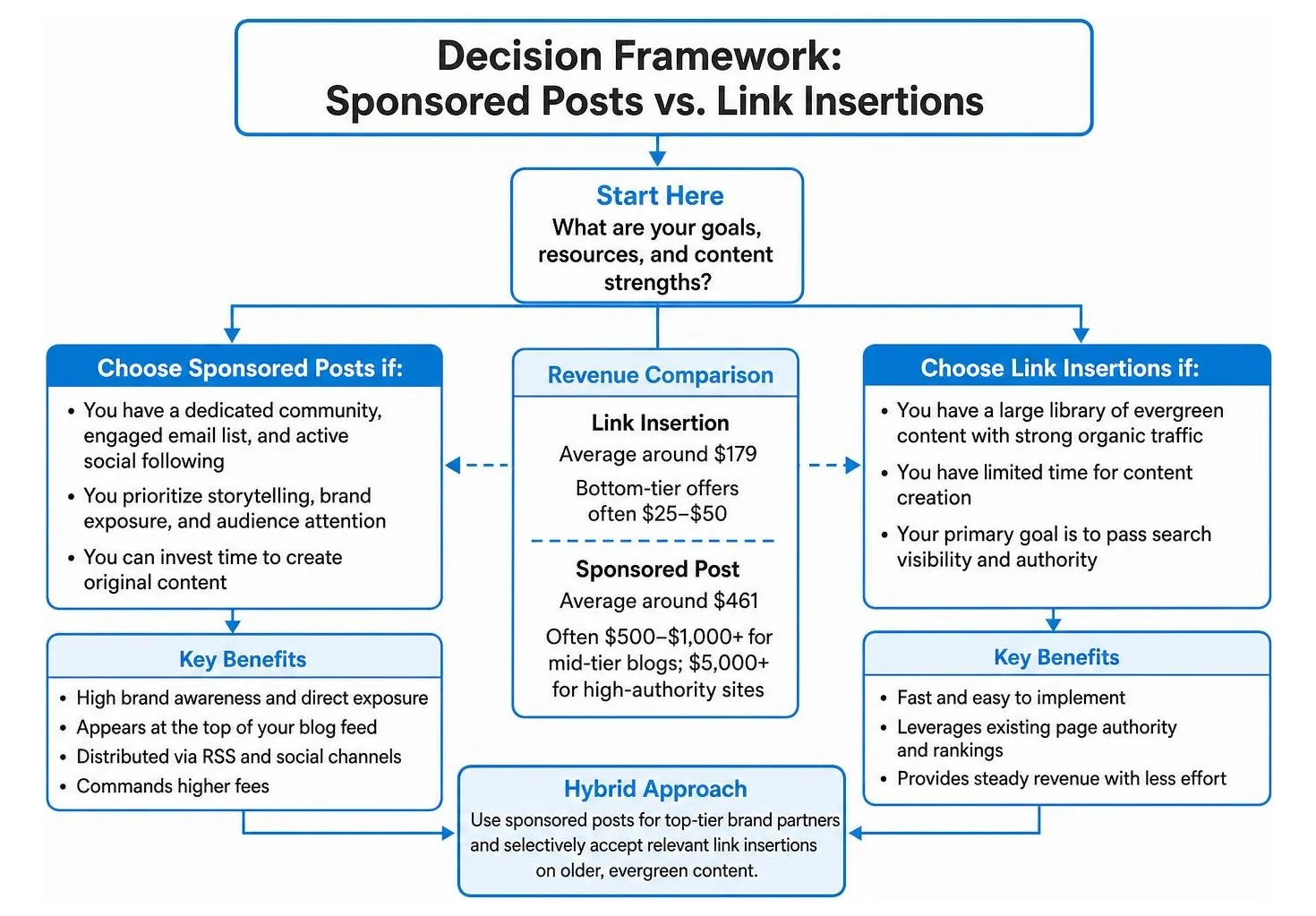
- Choose Sponsored Posts if: You have a dedicated community, an engaged email list, an active social media following, and you pride yourself on editorial storytelling. Sponsored posts allow you to showcase products you genuinely endorse while commanding premium brand sponsorship fees.
- Choose Link Insertions if: You run an extensive library of mature, evergreen informational content that gets steady organic search traffic, but you have limited hours each week to draft long-form content.
Many seasoned creators explore comprehensive blog monetization methods compared across the industry, discovering that a balanced hybrid approach works well: using dedicated sponsored reviews for top-tier brand partners while selectively accepting relevant resource updates on older informational guides.
Evaluating Sponsored Posts vs. Link Insertions: Which Type of Opportunity Fits Your Blog in Terms of Revenue?
When you set out to make money blogging, the financial math between these two models diverges quickly.
Industry benchmarks indicate that the average cost of a link insertion sits around $179, with bottom-tier offers frequently trying to secure placements for as little as $25 to $50. In contrast, the average cost of a guest or sponsored post hovers around $461 across the broader web, with dedicated influencer sponsorships regularly reaching $500 to $1,000 for mid-tier blogs and upwards of $5,000 for high-authority publications with substantial monthly traffic.
Sponsored posts command higher rates because the advertiser is buying multiple assets at once: your creative labor, your audience's attention, immediate social distribution, and prominent placement on your site. Link insertions only purchase a single piece of real estate inside existing copy. If you have an established site with high Domain Authority (DA 50+) and strong organic search volume, you can charge premium rates for both formats. However, relying solely on cheap link insertions forces you to sell dozens of links to match the revenue generated by a single well-executed brand collaboration.
Final Verdict on Sponsored Posts vs. Link Insertions: Which Type of Opportunity Fits Your Blog?
For newer blogs or sites building niche authority, dedicated sponsored post opportunities provide far superior long-term value. They establish your reputation as an authentic creator, build a transparent portfolio of brand case studies, and preserve your site's standing with search engines.
Link insertions make practical sense only when an advertiser approaches you with a resource that genuinely enhances a legacy post—such as adding a comprehensive industry survey to a 3-year-old guide. If the proposed link does not provide clear value to a human reader browsing your resource pages, the short-term payout is rarely worth the underlying risk to your digital brand.
SEO Safety, Link Attributes, and Google Compliance
The most significant operational difference between these formats lies in how search engines view paid links. Google’s Search Essentials (formerly Webmaster Guidelines) explicitly state that buying or selling links that pass ranking credit (PageRank) violates spam policies.
When evaluating niche edits against sponsored content, the compliance risk boils down to link attributes. Whenever financial compensation, free products, or commercial incentives exchange hands, Google requires publishers to qualify outbound hyperlinks using appropriate link attributes:
rel="sponsored": The officially recommended attribute for paid promotional links, advertisements, and commercial placements.rel="nofollow": A universal fallback tag indicating that search engine crawlers should not associate your site's ranking authority with the target page.rel="ugc": Reserved for user-generated content, such as forum discussions and blog comments.
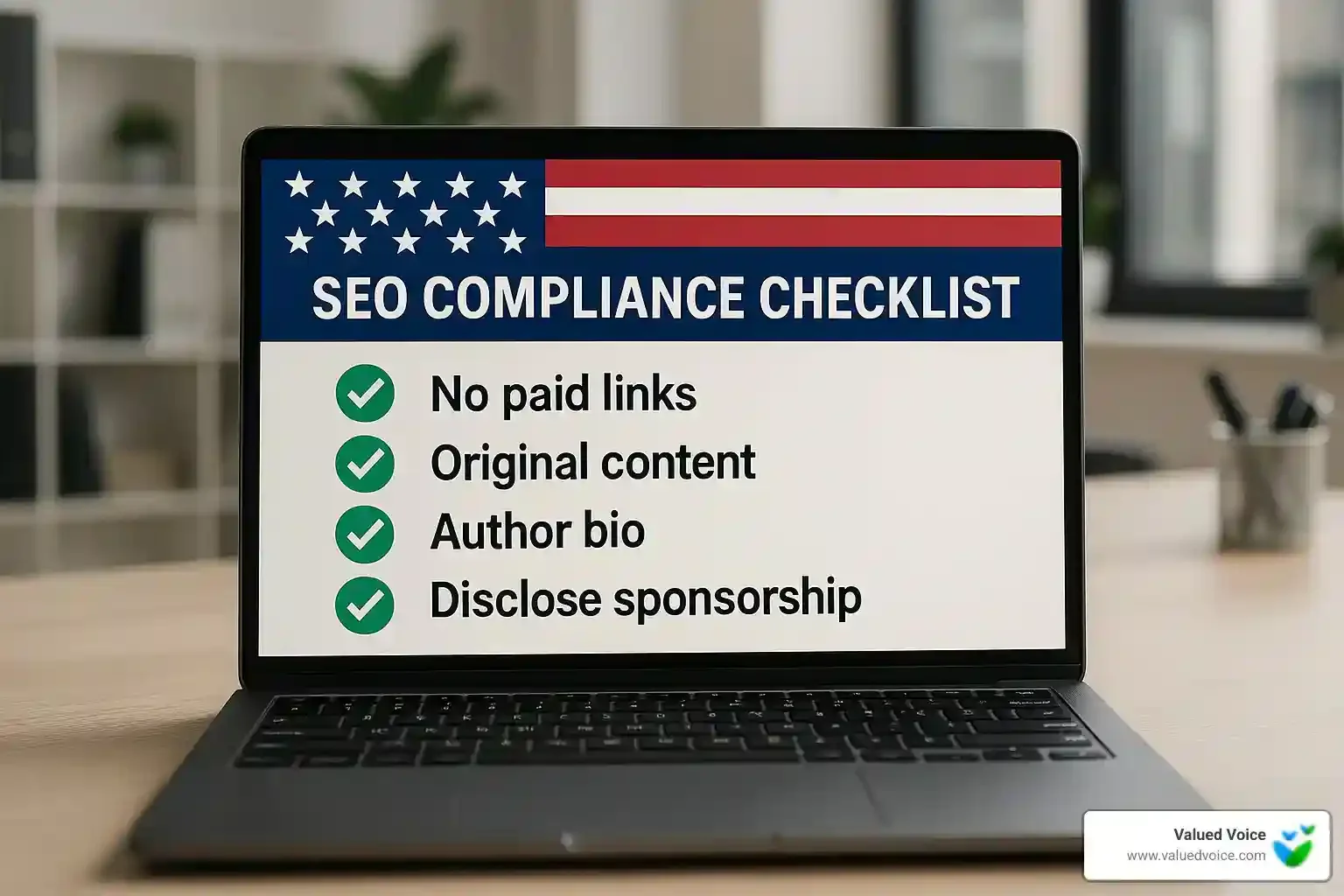
Accepting money to place a hidden "dofollow" link inside an existing post exposes your domain to algorithmic suppression from Google’s Link Spam systems or manual actions from the webspam team. A manual action can instantly de-index pages or wipe out your organic search rankings overnight.
FTC Disclosure Rules and Reader Transparency
Beyond search engine guidelines, consumer protection laws mandate transparency. In the United States, the Federal Trade Commission (FTC) requires clear, conspicuous disclosures on any content created in exchange for payment, gifts, or affiliate compensation. Similar regulations apply across the UK (ASA), Canada (Ad Standards), and the EU.
Compliance requires simple, transparent practices:
- Prominent Placement: Disclosures must appear at the top of the article before any commercial links or promotional claims appear. Placing a tiny disclaimer in the footer or hiding it inside a terms page does not meet regulatory standards.
- Clear Language: Use plain terms like "Sponsored by [Brand]," "Paid Partnership," or "Advertisement." Avoid ambiguous shorthand such as "Collab," "Partner," or "Spon."
- Visual Distinction: Ensure the disclosure text is easily legible across mobile and desktop devices.
Transparent labeling does not repel readers; deceptive promotions do. Audiences appreciate honesty, and clear disclaimers protect your business from hefty regulatory fines.
The Impact of Backlink Outflows on Domain Authority
Every external link you publish directs a portion of your site's crawl equity outward. While citing trustworthy, high-authority references enhances your topical relevance, turning your blog into an indiscriminate link hub degrades your backlink profile balance.
Our high DA guest posts complete guide explores how outbound link velocity impacts site trust. If an older informational article suddenly sprouts six external dofollow links to unrelated commercial sites—such as online casinos, crypto exchanges, or foreign e-commerce stores—search algorithms flag that URL as compromised or commercially manipulated.
Maintaining a healthy site architecture requires keeping your outbound links natural, highly relevant to your subject matter, and strictly moderated.
How to Vet Paid Collaboration Offers and Filter Out Spam
The link-building marketplace is flooded with automated outreach. Low-quality platforms make up almost 98% of the inventory in public link networks, meaning bloggers are constantly targeted by generic mass pitches.
Learning how to get blog approved for sponsored content through legitimate creator networks will save you from sorting through spammy cold emails every morning.
When an outreach email lands in your inbox, evaluate the sender using a systematic vetting sequence:
- Topical Relevance: Does the advertiser's product or industry naturally fit your blog's core subjects? A tech blog should not publish links to home roofing contractors.
- Domain Quality & Metrics: Inspect the target URL using reputable SEO tools. Look for clean organic search traffic trends, sensible domain authority metrics, and an absence of sudden penalty drops.
- Anchor Text Naturalness: Reject pitches that insist on awkward, grammatically broken commercial anchors (e.g., "best cheap car insurance online free quote"). Insist on natural, branded, or descriptive phrasing.
- Target Page Integrity: Visit the landing page you are asked to link to. Ensure it is a secure (HTTPS), functional, high-quality resource rather than a thin affiliate bridge page or a direct checkout screen.
Red Flags in Outreach Pitches and Link Insertion Requests
To safeguard your blog's reputation, immediately archive or reject outreach messages displaying these common red flags:
- "Dear Webmaster" or "Dear Site Owner" greetings: Automated mail merges that demonstrate zero familiarity with your content or name.
- Demands for secretive dofollow links: Requests explicitly instructing you not to label the post as sponsored and not to use
rel="sponsored"orrel="nofollow". - Pre-written, low-effort AI copy: Pitches offering "free high-quality articles" that turn out to be spun, generic text crammed with unnatural hyperlinks.
- Insultingly low compensation: Offers asking to insert commercial links for $15 or $25 while demanding permanent placement guarantees.
- Unrelated or high-risk niches: Requests to promote essay-writing services, unlicensed pharmaceuticals, adult sites, or offshore gambling platforms.
Best Practices for Negotiating Rates and Retaining Editorial Freedom
When a legitimate brand reaches out, maintaining control over your publishing calendar and editorial standards is paramount. Successful creators establish firm boundaries early in the conversation:
- Set a Standard Rate Card: Create baseline pricing for dedicated reviews, standard sponsored posts, and contextual link updates. This weeds out budget link brokers immediately.
- Retain Final Editorial Veto: Always state in your agreements that you reserve the right to edit copy, adjust anchor phrasing for grammatical flow, and decline placements that do not meet your quality standards.
- Standardize Link Attributes: Make it clear up front that all paid collaborations adhere to search engine guidelines via
rel="sponsored"orrel="nofollow"tags. Legitimate brands focused on digital PR, referral traffic, and brand affinity will readily agree. - Limit Revisions: Specify that brand-provided feedback is limited to one or two rounds of minor factual corrections to prevent endless rewriting cycles.
By establishing professional boundaries, you position yourself as a premium content partner rather than an automated link directory. If you are looking to monetize systematically, reviewing curated networks for bloggers sponsored content provides access to verified brand campaigns that respect your rates and editorial independence.
Frequently Asked Questions About Blog Monetization Placements
Can accepting paid link insertions get your blog penalized by Google?
Yes. If you accept payment to insert dofollow backlinks into your content without applying rel="sponsored" or rel="nofollow" attributes, you violate Google's Search Essentials link spam policies.
Search algorithms continuously analyze link velocity, anchor text distributions, and site out-link patterns. If Google detects unnatural paid link patterns on your site, it can issue an algorithmic ranking demotion or a manual webspam action. A manual penalty suppresses your blog's organic search traffic and requires submitting a formal reconsideration request after removing or tagging all offending links.
How much should bloggers charge for a sponsored post vs. a link insertion?
Pricing depends on your niche, organic search traffic, Domain Authority, and audience engagement levels:
- Link Insertions: Typical market rates range from $100 to $300 for established blogs with steady organic traffic, though high-authority publications with substantial search visibility can command $400+.
- Sponsored Posts: Standard rates generally range from $250 to $1,500+ for mid-tier blogs (10k–50k monthly sessions). Established industry blogs and creators with engaged newsletter audiences regularly command $2,000 to $5,000+ per campaign.
Which placement takes less effort for publishers to fulfill?
Link insertions require significantly less manual effort. Fulfilling a link insertion involves opening your CMS, locating an existing post, inserting the designated link or short sentence, updating the URL, and sending the live link to the client—a process taking under ten minutes.
A sponsored post requires comprehensive outlining, product research, writing 1,000+ words of engaging copy, formatting custom imagery, setting up SEO metadata, and coordinating social distribution. However, the substantially higher payout of sponsored posts usually yields a better return on your invested creative time.
Conclusion
Both sponsored posts and link insertions offer viable paths to monetize your digital presence, but they serve different roles in your long-term publishing strategy.
While link insertions provide quick, low-effort supplemental income, they carry heightened SEO risks if managed improperly without standard compliance attributes. Sponsored posts take more creative dedication, yet they reward you with significantly higher payouts, deeper brand relationships, complete editorial freedom, and unshakeable reader trust.
At Valued Voice, we believe creators should never have to compromise their site's integrity to earn a meaningful income. Our platform gives you complete price control, full editorial freedom, and rapid payouts by connecting you directly with vetted brands looking for authentic promotional partnerships.
Ready to monetize your content safely? Join Valued Voice to access high-quality sponsored post campaigns and build a sustainable, audience-first revenue stream today.