Key Takeaways
- A media kit functions as your professional resume and portfolio combined — it answers who you are, who your audience is, and what results you deliver.
- The five essential elements of a winning media kit are your story/brand identity, services and rates, audience demographics, case studies, and clear contact info.
- Using a template saves hours of design work while ensuring you don't miss the details brands expect to see before agreeing to a partnership.
- Choosing the right template depends on your niche and goals — influencer, business, and brand media kits each emphasize different metrics and layouts.
- A polished media kit signals professionalism and readiness, often making the difference between landing a partnership and getting passed over.
Table of Contents
- 1. Why a Media Kit Template is Your Secret...
- 2. What is a Media Kit and Why Is It Your Most...
- 3. The Anatomy of a Winning Media Kit: 5...
- 4. How to Choose the Right Media Kit Template
- 5. Pro Tips for a Standout Design and Common...
- 6. Frequently Asked Questions About Media Kits
- 7. Conclusion: Turn Your Media Kit into a...
Why a Media Kit Template is Your Secret Weapon for Landing Brand Deals
Whether you're a blogger, influencer, or content creator looking to land brand partnerships, you need more than just great content—you need a professional way to showcase your value. A well-crafted media kit is the key, and using a template is the smartest way to build one that gets results and helps you stand out to potential partners.
What is a Media Kit and Why Is It Your Most Powerful Tool?
Think of your media kit as your professional resume and portfolio combined. It’s the document that introduces you to potential brand partners, tells your story, and proves why working with you is a smart investment. It answers the key questions every brand has: Who are you? Who is your audience? What results can you deliver?
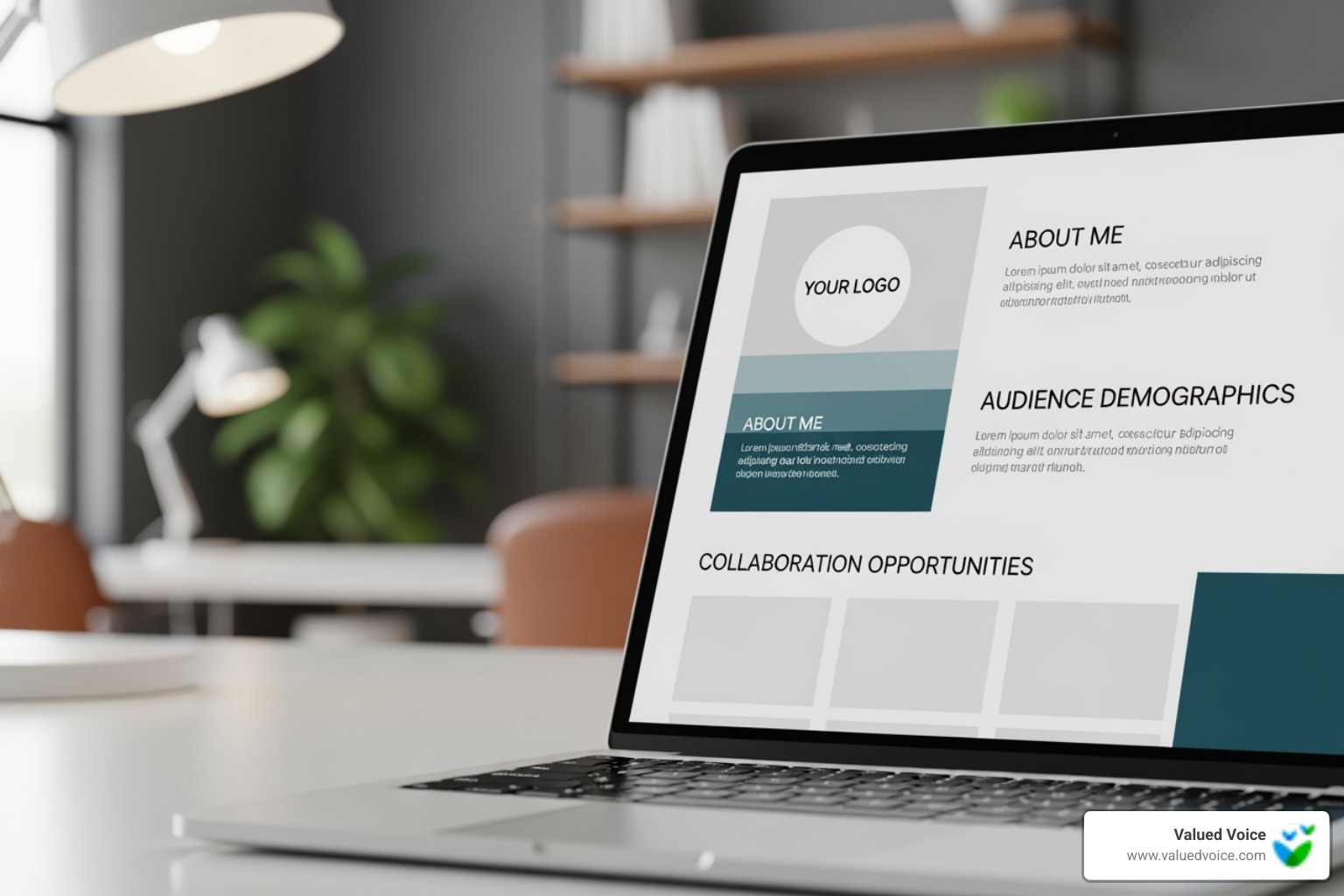
A media kit template is a pre-designed document or webpage that helps you present this information in a polished, professional way. Instead of starting from scratch, a template gives you a proven structure to fill in with your own information—saving you hours of design work while ensuring you include everything brands want to see.
Here's what you need to know:
- What it is: A customizable document (usually PDF or digital) showcasing your brand story, audience demographics, engagement metrics, past collaborations, and contact information
- Who needs one: Bloggers, social media influencers, content creators, small businesses, and anyone seeking brand partnerships or sponsorships
- Key benefit: Templates save time and money while giving you a professional look that builds credibility with brands
- Popular formats: PDF (most common), PowerPoint, Canva, Notion, or interactive webpages
- Cost: Free to premium options available, with 400+ templates on platforms like Canva and Visme
For creators and influencers, a media kit is essential for landing sponsored posts and other collaborations. A polished kit signals that you are professional, organized, and serious about partnerships, which is a crucial part of any Influencer Marketing Strategy Complete Guide. The reality? Brands expect a media kit. When you're competing for partnerships, not having one sends a message that you're not serious about collaborations. A well-crafted media kit template helps you stand out, demonstrate your value, and make the decision to work with you easy for brands.

Media Kit vs. Press Kit: Understanding the Key Difference

-
A media kit is a sales tool. Its goal is to attract collaborations and sponsorships. You use it to proactively pitch your value to brands and marketing agencies, focusing on partnership benefits and audience data. When you're looking for sponsored post opportunities, you send a media kit.
-
A press kit is a PR tool. Its purpose is to provide information to journalists and media outlets for news coverage. It contains factual information, company history, and high-resolution assets to make a reporter's job easier.
In short, a media kit sells a partnership, while a press kit facilitates a story. For landing brand deals, you need a media kit template designed to showcase your value as a collaborator.
The Anatomy of a Winning Media Kit: 5 Essential Elements
A winning media kit template tells a compelling story that builds trust and showcases your value. To make a brand's decision easy, ensure your kit includes these five essential elements.

1. Your Story and Brand Identity
Introduce yourself and what makes you unique. This section should quickly convey your personality and purpose.
- About Section: A brief bio or company overview that explains your mission and what problem you solve for your audience.
- Professional Visuals: Include a high-quality headshot or company logo to reinforce credibility.
- Brand Voice: Ensure the tone is authentic and consistent with your online presence to help build a following of Brand Advocates.
2. Services, Rates, and Collaboration Options
Be clear about what you offer and what it costs. Vagueness can kill a potential deal.
- Partnership Opportunities: List the types of collaborations you offer, such as sponsored posts, product reviews, or brand ambassadorships.
- Packages: Detail specific offerings like Sponsored Post Opportunities or Product Seeding.
- Pricing: Provide starting rates or rate ranges to set expectations and filter inquiries. For context on what to charge, see How Much Do Influencers Make.
3. Audience Demographics and Key Metrics
This is the data that proves your value. Brands aren't just partnering with you; they're accessing your audience.
- Audience Profile: Detail your target audience's age, gender, location, and key interests.
- Key Metrics: Showcase your follower count, but emphasize more important numbers like your Instagram Engagement Rate.
- Website Traffic: For bloggers, include monthly unique visitors and page views from a tool like Google Analytics.
4. Case Studies and Past Successes
Show, don't just tell. Provide evidence that you deliver results.
- Testimonials & Logos: Include quotes from past clients and logos of brands you've worked with.
- Campaign Results: Share specific metrics, such as "Generated 500+ pieces of User Generated Content" or "Drove a 30% increase in sales."
- Visual Proof: Add screenshots of successful posts or positive comments to make your success tangible.
5. Contact Details and Call to Action
Make it easy for brands to take the next step.
- Contact Information: Provide a direct email address and clickable links to your website and social media profiles. If you're just starting, learn How to Start a Blog.
- Call to Action (CTA): End with a clear next step, such as "Let's discuss a partnership" or "Request a custom proposal." A strong CTA is key when Negotiating with Influencers.
How to Choose the Right Media Kit Template
Choosing the right media kit template is about matching your brand's needs with the right design. Consider your industry, your audience, and your preferred format. Most creators use a PDF format for its universal accessibility, while others prefer an interactive webpage for real-time updates. Having both—a downloadable PDF for pitches and a live page on your site—is an even better strategy. As noted in our guide on How to Start a Blog, versatile digital assets are key to success.

Template vs. Building From Scratch
For most creators, using a template is the clear winner. They are designed by professionals, saving you time and ensuring a polished result so you can focus on your content.
| Feature | Using a Template | Building From Scratch |
|---|---|---|
| Cost | Often free or low-cost | Can be expensive (designer fees) |
| Time | Fast (customize in hours) | Time-consuming (days or weeks) |
| Professionalism | High (pre-designed by experts) | Varies (depends on your skill) |
| Ease of Use | Very high (drag-and-drop) | Low (requires design software) |
Finding the Perfect Influencer Media Kit Template
As an influencer, your template should reflect your personality and aesthetic. Look for a visual-first design that has:
- Space for high-quality images that showcase your content style.
- Clear sections for social metrics, especially your Instagram Engagement Rate and audience demographics.
- A dedicated collaboration section to outline your partnership packages.
Whether you're a Micro-Influencer or have a larger following, the right template helps you communicate your unique value. Learn more about the different 8 Types of Social Media Influencers to see where you fit.
Selecting a Business or Brand Media Kit Template
For businesses, a media kit template should project credibility and strategic value. The focus shifts from personal brand to company track record. Choose a template with:
- A structured layout for your company story, mission, and history.
- Clear sections for product/service details and partnership tiers.
- Space for press mentions, client logos, and case studies that emphasize ROI.
Pro Tips for a Standout Design and Common Mistakes to Avoid
Even the best information can get lost in a poorly designed media kit. Presentation matters just as much as content. Here are a few pro tips for a standout design:
- Maintain Visual Consistency: Use your brand's colors, fonts, and logo throughout. Tools to maintain brand consistency can help you customize templates to match your aesthetic.
- Prioritize Readability: Use clear fonts, ample white space, and headings to make your kit easy to scan.
- Use High-Quality Imagery: Blurry or unprofessional photos undermine your credibility. Use high-resolution images that reflect your brand quality.
- Optimize for Mobile: Many brands will view your kit on a phone. Ensure your design is mobile-friendly and easy to read on small screens.
- Choose the Right Format: PDF is the standard format because it maintains its layout across all devices.
5 Common Media Kit Mistakes to Avoid
Avoiding common pitfalls can dramatically increase your chances of landing Sponsored Posts. Steer clear of these Digital Marketing Mistakes that can derail your pitch:
- Outdated Information: A kit with old metrics or broken links signals a lack of professionalism. Update your stats and portfolio every 3-6 months or after major campaigns.
- Poor or Inconsistent Design: Clashing colors and messy layouts suggest a lack of attention to detail. Keep your design clean, professional, and aligned with your brand identity.
- Missing Key Metrics: Brands need data to justify their investment. Always include audience demographics, engagement rates, and website traffic.
- A Generic, One-Size-Fits-All Approach: Tailor your kit for each pitch. Highlight relevant case studies or audience interests to show you've done your research and understand the brand's needs.
- No Clear Call to Action: Don't make brands guess the next step. End with a prominent CTA and easy-to-find contact information. Making it easy to start a conversation is crucial when Negotiating with Influencers.
Frequently Asked Questions About Media Kits
Here are answers to the most common questions we hear from creators and businesses about media kits.
How often should I update my media kit?
Your media kit is a living document. Update it every three to six months as a rule, and immediately after any significant changes. An outdated kit undermines your credibility.
Trigger an update when you:
- Complete a successful brand campaign.
- See a significant change in audience size or engagement.
- Launch new services or change your rates.
- Rebrand or hit a major milestone.
Who needs a media kit?
If you need to professionally present your brand to attract opportunities, you need a media kit. This includes:
- Bloggers and Content Creators pitching for sponsored content.
- Micro-Influencers demonstrating their niche authority.
- Businesses of all sizes seeking partnerships, investors, or press.
- Artists, musicians, podcasters, and authors looking to secure gigs, sponsorships, or promotions.
A polished media kit template helps anyone communicate their value quickly and professionally.
Are media kits still relevant in 2026?
Yes, more than ever. In a crowded digital landscape, a media kit is a mark of professionalism that sets you apart. It makes a strong first impression and shows brands you are serious about collaboration. While formats may evolve to include more interactive elements, the core purpose remains the same: to present your value in a clear, organized way. As we explore in How Are Social Media Influencers Changing Digital Marketing, the need for professional communication is timeless. A standout media kit is a key competitive advantage.
Conclusion: Turn Your Media Kit into a Partnership Magnet
Your media kit template is more than a document; it's your most powerful tool for opening doors and securing brand deals. By combining compelling data with authentic storytelling, you can create a kit that turns a brand's "maybe" into a confident "yes."
Remember to include the essential elements: your brand story, clear service offerings, key audience metrics, and proof of past success. Choose a professional template, keep it updated, and always end with a clear call to action. Avoiding common mistakes like outdated info or poor design will put you far ahead of the competition.
A thoughtfully crafted media kit signals to brands that you are a professional, organized, and valuable partner. It answers their questions before they ask and makes their decision to work with you an easy one.
At Valued Voice, we help creators connect with brands for paid sponsored content on a platform that's fast, free, and puts you in control. A polished media kit is the perfect tool to maximize the opportunities you'll find with us.
Ready to land your next collaboration? Create your standout media kit, and then explore more digital marketing insights on our blog to continue growing your creator business.